Friday, June 14, 2013

Plastic Trees - Redux

An environmental economics professor of mine posits that if you want to preserve forests, you should stop recycling paper. The logic goes that the production of paper is what maintains the management of those places you now call forests and without it, they'd become tomorrow's suburbs. (hmmm, that could be a good name for something down the road) Here are a couple more developed arguments about this topic (Recycling is Garbage, Recycling, Can it be wrong when it feels so right?, How about this recycling thing?).

So what about the other uses of trees. Should we be replacing a staple building material, wood, with a non-renewable? Like that of paper recycling, the surface of the argument is simple and pushes toward reducing the use of virgin material in producing goods so that trees do not have to be cut down. This goes for paper, telephone poles, palettes, and even the boardwalk at the Jersey Shore. Technology steps in to figure out ways to reuse material or find/create substitutes. But, like in the last post about this topic, it is clear that we are not really finding substitutes for trees but are trying to design alternatives for very specific functions of a tree, be they carbon dioxide absorption or lumber for structural supports. Like the work searching for the next tree-like carbon sinks, recent news on the progress toward finding a replacement for wood raises more questions for me about whether we're going about all this in the right way.

The scant data available suggest that ‘plastic wood’ — typically a composite of waste wood and plastic — exacts a higher climate-change cost than natural wood, which has the benefit of pulling carbon dioxide out of the atmosphere as it grows. One 2011 study, funded by the timber industry but independently peer-reviewed, found that the greenhouse-gas emissions from the manufacture of plastic wood are nearly three times higher than those from the production of chemically treated cedar1.

Thursday, June 06, 2013

Fake Plastic Trees

William McDonough will often share with his audience a design challenge that requires incredible humility as a species - after all, he says, it took us 5000 years to put wheels on our luggage. The assignment: design a tree. In other words, design something that makes oxygen, sequesters carbon, fixes nitrogen, distils water, provides habitat for hundreds of species, accrues solar energy as fuel, makes complex sugars and food, changes colors with the seasons, creates microclimates, and self-replicates. Sure, he's taking the best parts of many different trees, but the point is that we could not even come close. Still, should we be trying to?

With humanity’s recent foray into 400ppm territory, a level for atmospheric carbon dioxide not seen in more than 3 million years, much attention has been given to engineering solutions that mimic a single aspect of tree function: extracting CO2 from the air. Right on time, a few weeks ago I read about new resins that could absorb CO2 from the air. This was an update a story I had read previously about similar work. In both cases the articles chronicle the slow slog forward by researchers toward making a better tree – or at least a part of a tree. These materials do nothing for soil stability, habitat, shade provision, etc. The new resins act like a strong base binding with CO2 in the air. This is something lye does with CO2 to form baking soda. But unlike baking soda, which requires energy inputs to heat it up to 900˚C to release its CO2, the new resins can release their CO2 with only the addition of water.

The most recent article on these resins told the story of a piece that could absorb 700 kilograms in a day (about the amount exhaled by you and a dozen friends in that same time). This was a piece about the size of a pizza box, so you can imagine how much would be required to account for just the CO2 we’re letting out of our lungs which is the least of our problems. The estimates are that we need to absorb about 650B tons (650,000,000,000,000 kg) by 2011 to stay below 450 ppm. That’s a billion of these pizza boxes to stay at the highest concentration the Earth has seen since before humans evolved. At a pricetag of about $600 per metric ton of carbon dioxide captured, that racks up a bill of roughly $390 trillion. Other estimates say it could work for $300/metric ton; bringing the total to a much more manageable $195 trillion – still more than twice the global GDP last year.

Of course finding that much money and building these trees to capture that much CO2 is just part of the problem. Where do you put all these fake trees? (cut down real trees to put up expensive, less effective, CO2-sucking ones). Maybe we could coat our CO2 producing devices - our cars and buildings - but we'd need to get the CO2 out of the coatings everyday. Some developers of the technology say they’d need 10 million ‘trees’ to bring concentrations down 0.5 ppm/year. Experts say it would only take about 3 more decades of development and a century of use before we could start to see the effect we’re looking for. We don’t have that much time or money. Or power, these devices would require new fleets of energy sources for pumping CO2 from the membrane to someplace where it could be stored indefinitely. This is perhaps the most important question, where do you put all the carbon once you’ve sucked it out? The material’s ability to release CO2 with water means it can quickly be made anew and the captured CO2 can be pumped to underground sequestration while the ‘trees’ go back to sucking carbon. The US DoE estimates we have plenty of room underground to store this stuff, we just don’t know how to do it yet.

Still, considered against alternative (or additional) geoengineering ideas to cope with a problem that we know the main source of, this one is not too bad. The others include things shielding the Earth from incoming sunlight with mirrors in space or larger particles we would put into the atmosphere in large quantities. Sound familiar? Some ideas focus on changing the chemical composition of the ocean (more than we already are) to stimulate CO2 uptake by certain organisms.

Reading more about these ideas and innovations is more depressing than inspiring. The people working hardest on these projects will be the first to tell you this is just wheel spinning that might be doing more harm than good.

It’s actually still a question whether it will take more energy to capture CO2 then the CO2 associated with [fossil fuel] energy in the first place” – Howard Herzog of MIT (via Yale e360)

It makes little sense to capture CO2 from the air until these sources of pollution have been eliminated.” – Robert Socolow of Princeton (via Scientific American)

The tragedy is there’s no reason to be considering these options at all if we could just learn to cooperate [on reducing emissions…]” - Ken Caldeira of the Carnegie Institution of Washington at Stanford (via Yale e360)

This is time for big ideas and innovation, but where’s some of that humility Bill McDonough hinted at? We’re focusing solely on reinventing the wheeled luggage when we might do better to spend some time thinking about how to travel lighter.

Wednesday, May 29, 2013

You'd Hate Living in Madison's Most Bikeable Neighborhoods

National Bike Month is almost finished. Last week B and I stopped along the bike path on several mornings to enjoy some free breakfast. If you happened to see "America's Most Bikeable Neighborhoods" on Atlantic Cities last week, you may have been inspired to look up a few of these bikable spots and see how/where the other half (<5%) live. I am fortunate to live in a 'bikeable' city - Madison gets a 67 overall (see above, red=0, green=100), putting it up there with the best of Major American Cities. I ride my bike all the time and it's great (and flat), so I was not surprised to find a couple of Madison's neighborhoods in the top 25 of the country, and one with a perfect 100. I was surprised by the names. Sure, I am relatively new here but I expected the neighborhoods I know with their dedicated paths along the lakes, bike boulevards with more cycles than cars, and collections of parks, restaurants, and shops to be those listed among the top in the nation. In short, I expected the great neighborhoods that I frequent on my bike, to be among the best possible; you can bike to the great neighborhoods here, and perhaps they're great because of that. And because I seem to equate bikeability with livability, when I found 2 Madison neighborhoods in the top 25 and I had no idea where they were, I sought to find out more about them. What I found was that each of these neighborhoods, though scoring very well with Bikescore, are not the places in Madison that I want to live.

Let's start with the bottom and work out way to the top. The neighborhood known as Brittingham Apartments was number 15 in the nation with a score of 99.6 - nearly perfect. The first clue that this is not really a neighborhood should be the fact that the word 'Apartments' is half the name. Similarly there are 'neighborhood associations on Madison's official Neighborhood Association map (above) for condos. No offense to the residents of Sherman Terrace, but a home owner's association does not a neighborhood make. The second clue is that only 86 people live here. In fact, both of the Madison neighborhoods on Richard Florida's top 25 list are the only places with less than 100 residents. When you finally start to get an idea of what Brittingham Apartments looks like on the ground - seeing the n'hood boundaries over streets and what those streets look like (below) - you can tell using automated Bikescore for neighborhoods is missing something, or at least not representing everything. While the one street that is actually in the neighborhood does look like a nice bike ride, but with less than 500 feet of road it would be quite a short one. The dead end street of Brittingham Apartments features a park but let's riders out onto S. Park, a fairly busy and high speed road that has a bike lane but it not for novices.

The other Madison neighborhood listed among the Nation's best received a perfect score. It's called Parkside Resident and it's located next to Brittingham Apartments. In fact, if I pointed to the two spots on a map, you would probably guess they were in the same neighborhood. Parkside Resident is so small that depending on where the boundary is drawn (if the western edge is moved a few feet) it would have no streets at all. When it's drawn generously it will include a portion of S. Park - a 4 lane divided road with a bike land and 30mph (below).

I am certainly in favor of using the neighborhood as a unit to evaluate amenity, engage the public, and empower communities. Neighborhood Associations are one of the most common civic activities that people regularly participate in. They are a way for people to exercise democratic power over what happens near their homes, and I think they are useful for stimulating actions that improve communities. When one neighborhood sees another doing great things, they may wonder why that's not happening in their neck of the woods and organize to change that. It could be biking-related, crime-driven, about parks or schools, or even something as simple as planting flowers in a traffic circle. One reason they work so well is they connect local interest to action by capitalizing on identity. The example of these super-bikeable Madison neighborhoods make it obvious that the automated bike score analyses have some short comings. While some may have been avoided by taking some important precautions in preparing the data - they could have limited the analysis to n'hoods with more than x # people, or of a certain minimum area - there are other parts to being a neighborhood and to being a great neighborhood that are more nuanced and less countable.

Other than being mildly funny to think about going for a bike ride in these places, one thing the analysis fails to do is link the unit of evaluation to one of action. This is something I would argue appropriately-defined neighborhoods would be well suited to do. If the residents of Parkside Resident found themselves lacking in another metric, I doubt there would be much utility in organizing the people who live in that one building to change something for themselves or at the city-level (particularly something like biking which relies on a network of infrastructure and policies to be useful, safe, and successful). They likely only have representation with the City as part of a larger group of neighborhoods. And I wonder if people on the City Council would even know where or what Parkside Resident is, or if the people who live there even consider themselves part of the Parkside Resident 'neighborhood.' This is one aspect of neighborhoods that makes them not only difficult to quantify but also to cultivate, they exist in the culture and the minds of the citizenry perhaps more than they do on the books. Basically, I think neighborhoods are communities that are initially spatially defined, and that over time come to embody the character of their residents - at least the best do, and that's difficult to measure.

Tuesday, May 21, 2013

Housing Update

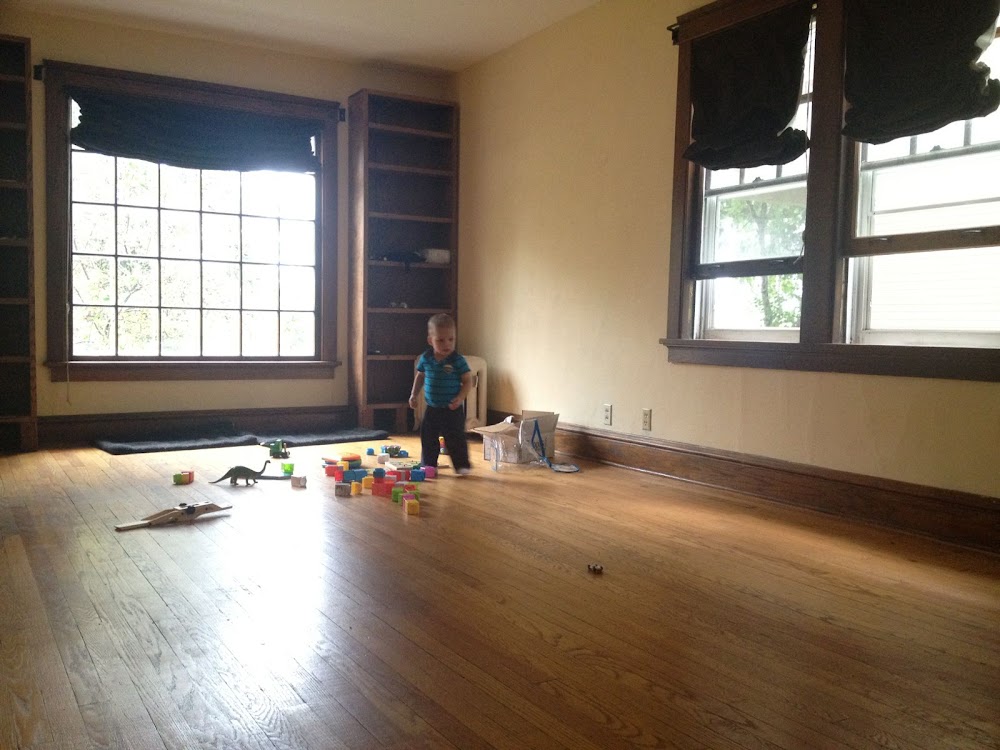
I have heard from several readers (aka friends, since only my friends read this blog) since posting about our housing woes. Thanks for the support. I am happy(?) to report that we've found, not one but two places to live. First, I am excited to say that we're making the big move to the East Side of Madison - to the Schenk-Atwood neighborhood. We were able to find a single family home that WANTS dogs and is a great location. Though a bit further from our jobs and the daycare (more on that later), it's right on the bike path, blocks from entertainment, restaurants, and a great local market, and a 10 minute walk to the lake. One thing about it, we can't move in until July. Since the house we live in now needs us out in May, we could have a problem.

This is where our second place comes into play. We found a sublet apartment on the west side of town that will go from May 15-July 15. Thus, we have a place to move into and we have some overlap to relax the moving process a bit. As I write this, we are almost completely moved in to the apartment and getting ready to spend our first night there this week. We'll be moving some other stuff into a truck this weekend and putting it in a storage unit for a couple months. Overall I'm excited to be moving, and I really like the prospects of living on the East Side this summer.

A few weeks ago on a Friday afternoon, in the middle of this housing search, we were told that the daycare we use would be closing. To me, the daycare seems like a can't miss business plan.

  1. have people line up for over a year to be your customers
  2. hire young woman who have studied to perform their dream job - taking care of cute little kids
  3. charge whatever you want
  4. refuse to provide diapers, and in some cases snacks and lunch - instead have parents pay and bring for their own
  5. if you like, operate extremely short hours everyday, either to charge extra for overtime care or to give your workers a great schedule

Daycares can and do get away with and benefit from all of these, some places do all of them at the same time. Unfortunately the daycare we have been going to was unable to take advantage and has to close. The building is in disrepair and the church next door, which owns the building, refuses to pony up for the work. Needless to say we've been subsequently scrambling to find new care. While it is much easier to get a 2 year old into a place than a toddler, it still is not easy. We looked at several places on both sides of town - since we didn't know where we'd be living yet - and finally settled on a 4 day a week place just blocks from our new 'July house' and we're searching for Friday in-home care.

I feel like we're almost through all of the tumult and ready to settle in and enjoy all Madison has to offer in the summer. We just have to move twice, switch daycares, and I forgot to mention I am squeezing in a trip to Africa for work. I can't wait (til it's all over and we have a new hectic list of things to take care of).

Monday, May 13, 2013

Housing

Some of you may know that we are in need of housing. Urgent Need. The house that we have been renting since moving to Madison in September, was recently put back on the market. It is now under contract and we need to be out by 9am on May 31st. We have been frantically looking for housing for the last two months and with the end of May mere weeks away the best option we have is an expensive two-bedroom that starts on July 1. We might have to move into a place that can accomodate us June to August, and then move again starting Aug 15th.

We are not the only ones in this situation. The housing market seems to be going gangbusters around here. Spring sprang, and people began to list their homes again. Word on the street is that there are a ton of buyers and houses on the market aren't staying there too long before they get snatched up. Nevermind that the house we live in had to lower the asking price before getting an offer, it was under contract a few days later. Landlords we've met with said they've seen other couples who were looking for new places because their rentals were sold (out from under them?).

Some of the problems with Madison's housing market that appeared anecdotal when we were searching from Atlanta last summer are revealing themselves as systemic now that we're here and looking again. First, the majority of rentals default to the Aug to Aug cycle to stay in line with the academic calendar (overwhelmingly). If you're a person that lives in the same place year round and you should need a place to rent, you had better hope you can start your lease around Aug 15th. If not, it's gonna be slim pickings.

Next, I would say there are a limited number of places that cater to the situation our family finds itself in. I'll be the first to admit that we have a fairly lengthy list of specific needs: dogs, cat, child, one car. This often directs us to look for whole homes for rent since we don't want the dogs barking every time someone below us comes home or a party to wake up our sleeping infant. At the same time we don't want the screaming kid and barking dogs bothering neighbors either. Plus, a yard is nice. Perhaps the most limiting factor is that we don't want to live in a property managed by a slumlord on a block composed of pseudofrats. The tendency of homes to be split up to accomodate, dare-I-say, less discerning undergrads, or even graduate students, can be felt in a number of neighborhoods, especially on the East side. Even homes that haven't been split up are accustomed to turning an office into a 'bedroom', thus getting one extra tenant and raising the rent they can charge for the home. On the West side of Madison, the homes are not often split up, but most are owner-occupied. The rentals are nicer but also harder to come by. Most don't allow dogs.

Even with my own headaches around housing in Madison, I still like to open the paper on Sunday and dream about the beautiful and luxurious city dwellings being offered in the high priced advertising space (as seen above). The New York Times recently labeled the people who actually get to occupy these spaces in real life "the Stratospherians." I know it's a dream and that's what I like about it, but to see the equal opportunity housing logo in the corner is like a slap in the face. The spirit of the entire ad is absolutely contradictory to this logo and what the program is about (see below for an actual picture of what is on the HUD program's website). I know these advertisers are just doing their due diligence and CYA routine, and I agree that anybody with the means to afford this place should be able to live there - no discrimination. But it irks me to see in hiding in the corner there. The people living there are Stratospherian. This is not the type of place you get on Section 8. One great thing about a dream, is that anything goes - it's an escape, hopefully to something more desirable. Adding this equal housing logo makes it real in a way that just seems sad. It kills my dream and makes me question my whole reality, beginning with the matter of whether or not I'm at a level deserving enough - be it socially, economically, or intellectually - to be reading publication I'm holding. But then again, those ads subsidize the cost of my Sunday paper, and it still costs over $6!!!!!!!!!!!!

While this started as a lament for Madison's housing stock and my own harrowing search, it has turned into a gripe with the ultrarich and their abodes. In another example of Stratospherian luxury housing, consider this modern dollhouse for the extremely boring child, available to you at less than $1000. I hope that anyone reading this will take a long look at this 'toy' and think about the dialogue that a child would create as he played with it. If you go the drab route of the Unhappy Hipster or the actual tone of child's imaginative play, the juxtaposition is interesting, in not also funny. Please add whatever you come up with to the comments.

Thursday, May 02, 2013

Dueling Design Houses

Two Production Houses for cultish climbing videos are dueling it out and producing some of the coolest and emotive sports videos I've seen. The two houses are called Big Up Productions and Louder Than 11. The videos they produce are highly stylized to be simultaneously chilled out, powerful, and bragadocious. Watch just a few videos and you'll get a sense for the type of music they tend to use - something you might expect to hear in a Amsterdam coffee shop or at a Thai island backpacker hammock farm.

One thing I notice with these videos are the overlay effects, often introducing text and such. If you've watched a news story you've seen how different broadcasts introduce people's names and titles, it's usually a bar across the bottom of the screen with text on top of it. It shows up and disappears with little fanfare, and often that's a good thing. If you watch the daily show you also see a lot of photoshopping technology mixed in with stories, but aside from the opening sequence there is not too much computerized video effects. Most of the progress we see in video effects is devoted to movies, trying to make things look real. We also see a lot of animation on FOX Sunday nights or South Park but not as much, I think, in the use of video effects to add info or feeling to good cinematography the way these climbing videos use it.

Louder Than 11 uses some of the coolest effects I've seen for bringing in text to describe settings, routes, and people. These are often highly stylized and thematically specific to each video. In the video below they introduce the names and grades of the problems using an effect that I think they should patent. I will try to describe it here. It begins with two circles, one smaller and within the other. They appear over a portion of the video, say a rock or the sky, and take on the frame of that rock or sky when they appear though the rest of the video continues to move. This helps draw your attention to the element. The circles spin in opposite directions quickly at first, then slowing text shoots out from their center. Next they begin to spin in the opposite direction and suck the text back in. The images inside in the circles end up matching the video at the point they finish spinning. I can't really explain it. I think they should start making powerpoint animations.

Big Up Productions is creating a franchise with their Reel Rock films that come out annually. One common effect they feature uses the incredible scenery the sport as the back drop for text and logos that seem to float over the landscapes. They also start on shots very far and zoom quickly in to the person who was initially unnoticeable. One clip that has me watching over and over again combines Radical Face's Welcome Home with Ueli Steck's speed record assent of the Eiger's North Face (below). I love the cinematography when the song hits its climactic chorus. The angle of the slope is clean and perfect, his silhouette struggles up the mountain toward the relief and light of the ridge and the southern face. So cool.

I'm not sure if it's a personal affinity to these videos and their aesthetic or if they are intriguing to more people, including non-climbers. People into the sport sometimes call these videos climbing porn. They're shot in beautiful settings, they feature suspenseful situations and often young, fit people. There is not really anything erotic about them but I do think they are nice to watch. In any event, these two production companies are dueling to produce a vibe as well as documentation of the sports and places they love. We all win I think. Let me know if you get stuck watching more than you intended.

Wednesday, May 01, 2013

Back up to Devil's Lake

The spring finally arrived so we made it outside and back up to Devil's Lake. We tried to go up there once around New Year's - we got out of the car, walked around for a few minutes, and drove back home. The snowshoes we had hoped to borrow from the Nature Center were not available on Sunday and it was freezing. This weekend was different. Benton is getting much better at hiking on his own. He also enjoys going to some of the HUGE off-leash dog parks around here and following the dogs as they run through the 'oak savannah.' Above is a photo of him in almost the same spot where we caught a shot of him during a November visit to the state park. He runs now, his hair is much longer, he tells us when he wants to get down and walk. Keep hiking.

Tuesday, April 16, 2013

Beer Oriented Development

Cross-posted at Dirty South Beer Club

Twin Cities' Surly Brewing recently won a plea to change a law that allow it to sell beer in its Brewery. Prior to the ruling makers of beer could give out glasses of beer for free during tours but could not sell and make beer in the same place. This prevented them from opening a restaurant or bar in the brewery. The Brewery's owner, Omar Ansari, petitioned the state to change the law. It's a law that is on the books in about half the states.

The ruling paved the way for more of Omar's business ventures, including looking for a site to open a new brewery and restaurant. This week, it was announced that Surly bought a site in St. Paul. It moves them closer to the city(s) and allows them to create a "destination brewery" - making the site of beer production one that is more connected with other businesses and communities in the St. Paul area. Surly also choose a brownfield site that is eligible for grants to assist with environmental remediation. The site's proximity to existing and planned neighborhoods and economic centers also makes it elegible for transit-oriented-development grants from the county. The national, state, and local laws that incentivize remediation of industrial locations, develop sites near transit, and encourage awesome local beer production (and drinking) came together to produce a great example of a new economic development model for cites. That model is based in beer.

The "destination brewery" that Surly hopes to create is perhaps the new 'must-have' storefront for thriving downtown revival. I love that they chose a site that is strategically placed to be transit-(and maybe bike)-friendly. Omar, says the craft beer business is booming in the Cities and hopefully they can create the type of bike and beer atmosphere that already exists in a couple of places (if it hasn't already). In some cases, like in Portland and Asheville, the beer and bike culture has spurred more economic development in the city. The combination of biking and breweries is one that has caught the attention of more than one travel writer(Portland (again) and Madison (maybe). Asheville has even branded itself Beer City USA after winning a 2010 poll of craft beer aficionados. So, generally I love this move by Surly and the city and state. The only question I have is how long is it gonna take until the brewery realizes this obvious corporate partnership?

Monday, April 15, 2013

Tiny Libraries

Regular readers who have been with me since long, long ago may remember a discussion while in Bogotà about their mobile and distributed libraries. I am happy to report that I have found something similar in Madison. Here, The Little Free Library is everywhere: at the park, the grocery store, in tons of front yards. Books rotate in and out, you take what you're interested in an leave your old books if you wanna pass them on to others.

I love this idea and I think it is a great indicator for neighborhoods. The presence of the library is itself a great sign. It signals individuals striving to create community in some small form. The books inside give you an idea of some of the interests of folks in the neighborhood. For the libraries in folks' front yards I always assume they are filled with books from the homeowners and I am getting a view into their personal paths. People also customize their libraries: some have dual French doors, others are miniature versions of the house they stand in front of with matching trim colors, others are collective efforts of the community members adding accouterment over time. I guess they could be magnets for spray paint and/or other outlets for teenage boredom. Here is a piece on them from the Wisconsin Magazine.

Yesterday I walked by one in someone's front yard a noticed the Complete Guide to Homeschooling. I let it be, but I am thinking of picking up the Gaylord Nelson Biography from the one at Wingra Park. I'll see if I can get through it before Earth Day next week.

Saturday, April 13, 2013

PhD

It has been a long time since I last posted. I have been spending more time tweeting and on Instagram, but a lot has happened since then. We elected a President, Birthdays March Madness (tear.), winter, and I finished my PhD. Just before the election I attended a conference in Cincinnati - where both candidates also found themselves that same weekend - and I headed directly to Atlanta and defended my dissertation on Monday Nov. 5th. I am happy to say that I passed and had one night to celebrate with some of my friends in Atlanta.

The title of the dissertation is Planning For The New Urban Climate: Interactions Of Local Environmental Planning And Regional Extreme Heat. It can be found here for those interested.

Since the defense I have been continuing to discover my role and develop ideas at Wisconsin as part of the Nelson Environmental Institute's Center for Sustainability and the Global Environment.

Friday, January 11, 2013

NIMBY - Madsion

We heard a lot about Madison before we moved here. Everyone we talked to loved the place. We haven't met anyone who didn't enjoy their time here, but we knew that sit was a bit of an island. A haven for protest and liberal energy in a state that is not severely conservative but elected Scott Walker, saw him restrict collective bargaining rights, then recalled him, and elected him again.

Our first real encounter with the vocal Madison public was around a proposal to put lights along a bike path. The bike path is known as the Southwest Commuter Path and runs between the SW neighborhoods (and towns further outside Madison) and campus and the Isthmus where it links up with other paths. The controversy arose between the neighbors living along the path and the path users. Several neighbors came out against the lights; worried about habitat (owl) disruption, night sky light contamination, and other reasons. Some even said crime might go up if criminals, now able to see the people they intend to attack, could wait to strategically attack those they think are weak. Supporters of the lights cited equality among transportation modes as a rationale for the project. The public works department revised the design of the project and even the lights themselves several times to alleviate concerns. They worked with the LED manufacturers to produce a different warmth of light at eye level. The final design is a bike path light unlike any other out there.

Some Coverage:

The Isthmus

City of Madison

The Cap Times

Madison Commons

I went to one of the several public hearings about the issue and took some notes. Some of the best comments came from an Alder in a nearby town, Fitchburg. He pointed out that the people you see on the path now are only the people comfortable using it as it is, so the claim that plenty of people use a dark path is misleading. He also noted that the more cyclists the path attracts, the less traffic will be on the roads and so benefits of the path extend to the general populous and not only those on the bikes.

The appeal of a town the recognizes non-motorized transport and legitimizes it with infrastructure spending was something that several young professionals mentioned explicitly. They noted that it was a factor in choosing to move to Madison. They said things like: "Make cities for people" and "We must begin to shift our transportation paradigm and legitimize all modes"

I kept thinking that many of the arguments against the lights based on safety were dismissive of the subjective nature of safety. People requested data on crime stats to 'prove' that safety was an issue, and conversely others in favor of the lights told their personal stories about not wanting to ride in the dark. Is fear of the dark measurable? I would say mine is about a 39.7.

One of the oddest comments came from a woman opposing the lights: "If I wanted it to be all lit up, I would have bought a house in the suburbs". This seems paradoxical to me, isn't the bucolic character of suburban living ('away from the bright lights of the big city') part of the appeal.

One of the most compelling arguments relates to whether or not this is the type of project that the city should be spending money on right now. There are certainly other needs for this money, but this is not really the issue that the city was discussing. That decision had already been made and and the money had been set aside. The electrical infrastructure for the lights had also been installed earlier when the path was first constructed. In the end, the final light design was approved by the city council and it will proceed.

Wednesday, January 09, 2013

Palm Oil

On a recent trip to the supermarket we encountered a band of small girls selling what appeared to be harmless baked (?) goods - cookies - as part of a fundraiser for their organization called The Girl Scouts of America. Now, I have bought Girl Scout Cookies before and I will buy them again (Thin Mints are my drug of choice), but this time was different.

After the transaction one of the girls handed me a slip a paper with some information on it about the cookies I had just purchased. The paper, shown above, had additional information about the ingredients of the cookies and the farming practices used to grow those ingredients. It was odd to receive information from the seller of a product, speaking ill of the product, right after you purchased said product. First, I appreciate the full disclosure and due diligence on the part of the Girl Scout's but to say this didn't catch me off guard would be a lie. I'm used to finding out about the reasons I might want to steer away from some products through alternative sources; the newspaper, a blog, not the seller themselves. Second the info sheet doesn't point out all the things the GS have changed to correct the hard this fundraising activity might be causing in other parts of the world, rather it simply states what's wrong with the cookies I just bought. What's more it throws the blame right onto me - "What's YOUR connection to rainforest destruction?"

I looked into into a bit more. The campaign was started by a few Girl Scouts from a troop in Michigan. (one of them was named Madison) The leading producer of palm oil is Indonesia. MOst of the crop's expansion in the last 20 years (in Indonesia) has happened on the island of Borneo. This island is home to the orangutan and this is a primary reason that the animal has become synonymous with rain forest destruction by palm oil plantations.more here.

Wednesday, December 05, 2012

Big Wins

Some say marriage is all about compromise, but certainly some battles are bigger than others. When moving into a new home there are all kinds of tensions and decisions to be made. These can be made together as a team or unilaterally, preferably by the one between you who is the font of knowledge on the particular topic. Sometimes I see fit to proclaim myself resident expert on one thing or another.

When we were moving into this home in Madison, I KNEW the exact right spot for the cutting boards. It was perfect and upon seeing the location for the first time I instantly thought - "cutting boards". As if every person, for all time, when seeing the shape and placement of this small nook would arrive at the same conclusion. Even without prior knowledge of what a cutting board was, or that it existed, one would see this void and react with the invention of a board, on which to cut things, as the object that should occupy this place. The context of the room (a kitchen) and the microenvironment of what I will call the cutting board nest imposed itself on the psyche of all those who gazed upon it. Lauren protested, but I remained steadfast to my intuition and the will of the cutting board nest. To this day the boards reside in that perfect spot. Little victories be damned, you gotta go big or go home in this marriage game.

Postscript: Our marriage has what I consider to be a pretty balanced yin and yang with respect to these compromises. I may have cashed in all my karmatic credits on this cutting board thing and hope it doesn't cause me to come up short in the next family planning discussion.

Monday, November 19, 2012

From Dungeon Family to Monroe Dungeon

It's only about 3 months late but here's the official blog announcement of our move to Madison. We left the Dirty South and ended up in the spiffy clean Midwest, left East Atlanta and found ourselves in West Madison. In the nick of time just before leaving we were able to find a nice home for rent that fit our needs. It had previously been on the market for sale and, finding themselves in a bit of a time crunch of their own, the owners agreed to rent to us. The home is right on the edge, or maybe just inside, a neighborhood called Dungeon-Monroe. The house and the neighborhood are great. Getting here didn't go exactly as planned. Our things were put on a moving truck in Atlanta and unfortunately were not scheduled to arrive in Madison until mor than two weeks later, after Lauren was scheduled to begin work. We decided to leave Detroit and move into the house without our things. My folks followed us with towels and air mattresses, some chairs, and a table. Even without our things, we found Madison to be very enjoyable and accommodating. One of the first things we noticed was that things were very close. Compared to Atlanta, where you'd have to drive 20 minutes to get somethings, the small town feel of Madison is enhanced by it actually being small. Lauren was able to use the bike share to get to work before our bikes arrived. We could walk to parks, the grocery store, and the free zoo. I wanted to compare the old neighborhood to the new one on some factors
East AltantaDungeon-Monroe
Population32,65410,012
Median HH income$44,101$67,454
Median HH Value$208,257$255,959
Median Age34.836.8
Walk Score2074
Transit Score3341
Registered Sex Offenders679
Avg Jan High5228
Avg July High8983
Feels like temp at time of posting 5340
Notable RankingsMaxim's #1 Man CityBest City for Young Adults
Madison is #29Don't see Atlanta
The first thing that strikes me about this list is that the numbers do a very poor job of capturing the most important differences between the places. The two neighborhoods are closer than expected for many of these metrics (July High temp?). When we moved here we immediately felt a lot better about our location and living situation. There are a lot of variables but is there really a number to capture the way you feel in a place?

Monday, September 24, 2012

Home Away From Home

Less than a month ago we headed north. We packed up the house in Atlanta over the course of about a week, and then the movers came on a Monday and put it all on their truck. We had planned to leave that day and drive to Michigan. There we were going to wait for our shipment to make it to Madison while we stayed at my folks' house. The movers ended up taking a bit longer than expected and it would have been a dangerous all-night drive to the Midwest. We made a quick call to the best hotel you've never heard of over in Peoplestown. Pet's welcome. Dinner, drinks, and conversation provided. Includes private balcony and kitchen. They even have kids' bath toys for your use. Many thanks to the Walk-Lynch's for putting us up and putting up with us.

Tuesday morning, bright and early, six bodies were loaded into the car in all manner of seats, crates, and beds. As you could imagine there was little room for us to take much of anything else with us in the car. Somehow I convinced Lauren to let me bring the desktop computer by claiming it would be necessary to get some work done before things arrived in Madison. This would be the longest car ride of Benton's life, and the furthest the cat and one dog had ever been from Atlanta. The morning began quietly and it was a smooth first three or four hours. I actually don't remember much of the trip being horrible. We stopped for lunch in Lexington and made it to Detroit in pretty good time.

We woke up Wednesday morning in Southgate, MI and got our first estimate for delivery in Madison, 13 days later. We could only complain to the company so long before we had to start thinking about what we would do with our things now arriving after Lauren was scheduled to begin her new job. We had planned to stay in Michigan through the Labor Day weekend regardless. We ended up getting great weather and a lot of family time. It was the first time we spent some regular weekday (non-holiday) time in Southgate - and the whole gang was along for the ride. We took Benton to the play ground at my old school. Walked the dogs by the high school and through the Southgate Nature Center located behind it. "When I went to school here, this was just a scary field."

My parents vacation had already been scheduled and so they were home to play with B in the yard and the kiddie pool. They also took a day trip to the Toledo Zoo and the Ann Arbor Hands On Museum. We went to see a friend's high school football game on Friday night. On our anniversary Lauren and I took a trip to Ann Arbor for a night out. We strolled around town and sampled brews at Jolly Pumpkin.

On the Wednesday after the holiday weekend we decided to leave and drive on to Madison. My parents followed with air mattresses, folding chairs, tables, and towels. Southgate was a great temporary home and introduction to the Midwest.

Friday, September 07, 2012

Leaving Atlanta

Lauren's job ended on August 17th. The week before, a get together - there is not really another word for it: it was not a party, not a ceremony, not a send off as much as some of her colleagues gathering to say goodbye and well wish - was held at the CDC with cake and drinks and a small speech by a boss figure. Members of her closest work team pooled some cash to buy us each a foam cheese supply item for our midwest destination. Benton now has his compulsory cheesehead.

In the week that followed boxes began to accrue and our things slowly, and then more quickly over the weekend, moved into them (or into piles and bags headed for Goodwill and the Salvation Army). A timely 'most e-mailed' article from the New York Times described the benefits of owning less. Each night of the week we had plans to meet up with another friend to say goodbye in one way or another. This included a wonderful Dirty South Beer Club farewell and an ice cream social to say goodbye to Katy and Ben as they moved on to California. We became a bit nostalgic, trying to hold on to the things that make Atlanta what it is even if we don't really like them. Finding a chicken bone in a parking lot or seeing an outrageous temperature reading became a photo opportunity.

Things got hectic in the last week and we became exhausted. Rooms got cleared in preparation for the movers who called on Friday to tell us they'd be there in a few days (ahead of expectations) to load everything into a truck. I think all the dust and cat hair and dog hair and dirt made its way into our lungs and exacerbated our tired state toward an illness. I hope this cough is not chronic.

Our best laid plans to give Benton one more day with his teachers at day care - some of the first folks who ever got to know him and vice versa - and leave midday for Michigan fell flat as the movers continued to load our things into the later afternoon. With our house empty we made a call to the best motel, free or otherwise, in the city limits (name withheld). We enjoyed our last night in Atlanta, as we had so often, with dear friends and good food. In the morning we returned to our house one last time to grab Fila and set off for a new chapter.

Benton's First Birthday

It's been three months since I have blogged. Sadder: there have been only 7 posts this year since the 2011 year in review. Saddest: There have not been many updates on Benton even though he has continued to grow and change. Maybe that is why the blog has not recorded his progress - it is too fast and too expansive to cover. Photos and videos are the mode of the day but even those fail to accurately document what has happened over the past year.

Yes, it has been a year since Benton was born. To celebrate, we all headed up to the northeast for a party. The first destination was Newport to see Gabby and Pappi (forgive me as I confuse all the monikers). In a maneuver out of a James Bond film we arrived at the Providence airport to find a car waiting for us in the lot (with a car seat!). We zoomed off to Newport; our parking and bridge toll paid for by the $20 left in the car's ashtray. Once there we enjoyed the cool summer day out on the porch and in the garden. The next day we trued to go to the beach but got rained out and instead went to an aquarium where you could touch crabs and sharks and starfish. next, we headed to Connecticut to meet up with Suse and the rest of the family, and to prepare for the party the next day.

To set the scene, decorations were made using the characters of one of Benton's favorite books. Notably it features a brown bear. The characters donned the edge of a homemade cake from Grandma and hung from the lights in the kitchen. Pictures of Benton from each month of his first year were draped through the entranceway. Benton went through about three or four outfits as he opened gifts and ate cake. Friends and family came in from as far as New York City - never mind that he himself flew in from Atlanta - to be with him on this special day. Later he played on the deck with giant bubbles.

When we got home the gifts continued to arrive and then be put together by his dad. Now Benton continues to improve his walking, throw in more and more talking, and grows every day.

Tuesday, June 05, 2012

Say Hi to ya Mutha for me

"Oh, I'm sorry. What'd you just say to her? Smile? Or were you talkin' to me? I hope you were talkin' to me because nobody talks like that to my mah. Apologize to her. Say 'I'm sorry Mrs. Lauren for being sch a dirtbag and disrespectin' you like I did. I deserve to be kicked in the face by a mule.' Now say it, or watch out for this left hook!"

Monday, June 04, 2012

Expedition

"Hello, and thank you for tuning in once again to another exciting episode of Georgia Outdoors. I'm your host Benton Gray and with me, as always, are my ready-for-adventure parents Jason and Lauren. Today we're here in beautiful Vogel State Park. Behind me you'll see a classic example of the early spring flora and geological formations that we'll be exploring today. Join us, won't you?"